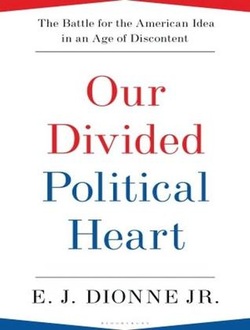
If rational, balanced thought ultimately loses in the marketplace of ideas for America's future, E. J. Dionne's disappointing "Our Divided Political Heart" may serve as an object lesson into why. Dionne confronts the passion and the historical fiction excesses of the Tea Party and recent conservative radicalism with such a cool, emotionally inert equanimity that one's nodding agreement quickly turns into nodding off. Dionne's central frame -- that we Americans have been struggling with the twin Angels of individuality and community since before our founding -- is not only accurate but is also the font of our unique strength. We have a profound history of moving the pendulum back and forth over the central balance between these two natures, perhaps most concretely in the Hamilton/Jefferson (commercial/agrarian) tug-o-war early in our history. The historical antecedent to the current Tea Party period is not, as they would enshrine, our revolutionary period but rather the 30 year aberration of high-individualism and robber-barons know as the Guilded Age that ended in the early 1900's during the presidency of Republican Teddy Roosevelt.
It is this struggle for balance which so inflames our present discourse. It must be pointed out, however, that the lines between political philosophies don't so neatly line up. Issues with strong individualistic constructs like marriage equality and reproductive rights are clearly issues of the "left." And issues of community or socialism like farm and sugar subsidies are certainly not anathema by the "right." We see where issues of opportunity -- "grow our base" -- can clearly cross-cut.
Dionne says all the right things, but in such a pedantic and erudite-to-the-point-of-obfuscation manner that the reader is left either to assume that no winning idea would be this obtuse or that community could never match the red meat entertainment of conservatism: "get your governmental hands off my medicare!"
But lest we leave this review with a sense of dread, I'd like to quote the non-Dionne of his time, H. L. Mencken, who observed the balance-seeking nature of the american electorate when they abandoned the Democrats of Wilson to embrace the Republicans of Warren G. Harding in 1920: "tired of the intellectual charlatanry, the electorate turns to honest imbecility."
To be tweeted links to my new posts -- blog, book reviews (both nonfiction and fiction), data or other recommended tools -- either go to Twitter.com and follow me @jcrubicon, or just go to my Home page and click on the Twitter button on the right, just above the tweet stream, and follow me @jcrubicon.

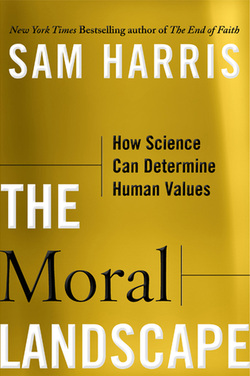
Sam Harris does a masterful job of setting up the need, the value and the rationale for his premise -- that Science can serve as the neutral referee in a moral landscape so presently marked by polarization. He then, in the precision that only a neuroscientist could bring to bear, spends the rest of the book undercutting and unwittingly disproving his thesis. Largely by being unscientifically blinded to his own prejudices, Harris sets up the strawdog of religion to his science talisman. He refers to faith-based religion as "that great engine of ignorance and bigotry." For every neuro-transmitter Harris identifies, there are equal parts leap of faith to some future "provable" fact. The people who must act in this moral landscape are in essence being asked to trade in their priests, mullahs and televangelists for a new set of all-knowing arbiters. (With a hell of a lot more jargon, to boot.) In this way, Harris is skipping down the path Christopher Hitchens plowed in his "God is not Great."
What is one to make of this? Quite a bit, I think. For I believe, Harris' description of the moral landscape we confront today is powerful and instructive in its own right. If we come at it from a different scientific vein -- the anthropologist -- to understand rather than to impose a different/substitute moral order, I think Harris has helped us see the flaws in our present rubrics without having to embrace an equally inadequate set of commandments.
Let us look at the trap of moral loggerheads we face in western societies. Harris cites Christian v. Secular in the US and Muslim v. Irreligious in Europe as the polar ends of the conservative - liberal, right - left continuum. Unfortunately, it has grown to be much less continuum and more a valley separating two uncompromising peaks. If from the right the authority is God, then there are right answers to questions of meaning and morality. Meanwhile, the left with the preponderance of postmodernism in the Universities seems to hold that no objective right answers exist.
Thus, on the one side you have religious correctness for even the wrong action, while on the left you have profound doubt leading to inaction. Knowing what the creator envisioned empowers the right to impose; not knowing or doubting anything can be right, forces the left to surrender and lay supine in the face of the "right." Religion defines moral right in terms of a hereafter reward versus human benefit in this world. Present suffering doesn't matter. In fact, it is seen as cleansing them of their sins. Harris thus explains how a suicide bomber or a pope denying contraception to the poor are just different points on the same religious mandala.
It seems to me that instead of attacking the "hereafter" focus of religion and seeking to substitute the calculations and prescriptions of science as the trier-of-fact in our set of moral hazards, wouldn't it serve to look at the other side of that "hereafter v. present human impacts equation" and seek to make clear and potent the human benefit/detriments of decisions. If loss aversion is at the root of conservatism and this compels an acceptance of social inequality, wouldn't the more appealing approach be to demonstrate how benefiting "those" folks redounds to all of our self-interests. If one is not able to reconcile the tension between personal and collective wellbeing, there is still no reason to believe that they are generally in conflict. Isn't that what Henry Ford, that paragon of conservatism, did with the $5 / day wage? Isn't that the apolitical "outcome challenge" we are seeing in a growing number of communities?
Attacking religious over-reach in service of the hereafter sets up the wrong manifesto. In fact, it plays into the "limits mentality" to the extent that the most powerful societies on earth spend their time debating issues like gay marriage and immigration instead of nuclear proliferation, genocide, energy security, climate change, poverty and failing schools. Rather shouldn't the left be more focused on actually achieving something with clarity and transformative human benefit so that it can leaven the narcotic of a thousand virgins with the glory of now.
To be tweeted links to my new posts -- blog, book reviews (both nonfiction and fiction), data or other recommended tools -- either go to Twitter.com and follow me @jcrubicon, or just go to my Home page and click on the Twitter button on the right, just above the tweet stream, and follow me @jcrubicon.
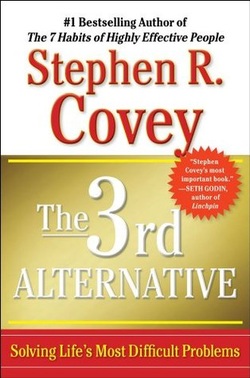
The late Stephen R. Covey has left a powerful legacy. His "Seven Habits of Highly Effective People" is THE self-improvement primer to a successful life. The habit -- "begin with the end in mind" -- is at the root of all of my "Working Differently" efforts. (See my take on the 7 Habits as it applies to community transformation). "The 3rd Alternative" could have been so much more. I think Covey is right to try to modernize the Hegelian philosophy of thesis-antithesis-hypothesis. Though he fails to mention nor credit Hegel, there is a powerful need in today's polarized debate to insert this process leaven of humility. That, in fact, truth (solution) is an amalgam of multiple points of view. As Covey correctly states: this is not compromise but actually something beyond; something transcendent of the ideological or strategic limits so far permitted. I have always enjoyed the sense of surprise and wonder in our Working Differently communities, when people who saw themselves as polar opposites in seeking community solutions discover that what was truly at polar opposites was their preconceived notions of each other. The point of intersection will never be in the knee-jerk slogan but rather in the aspiration. (Don't contend about big or small government -- these are just potential tools. Focus rather on what your community can/should be.) For it is here -- in the "what to we want?" -- that business person and social worker can see their own role and each others' value in the solution more clearly. This transcendent sense of something other than narrow points of view is the missing piece in "The 3rd Alternative." It is what, in the end leaves, this effort inert. For Covey fails to deal with two corseting postures in today's arena. First, there is not universal value in solutions. And, second there is a profound diminishing in our belief that solutions are achievable. These two constraints may be mirror images of each other, but their cancer affects our individual, organizational and community urge to act. And this passivity keeps us out of the arena and therefor unaccommodating to a "3rd Alternative." To be tweeted links to my new posts -- blog, book reviews (both nonfiction and fiction), data or other recommended tools -- either go to Twitter.com and follow me @jcrubicon, or just go to my Home page and click on the Twitter button on the right, just above the tweet stream, and follow me @jcrubicon.
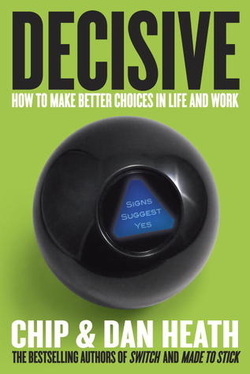
A pretty good sign for the value received in a book is how many blog postings can you get out of it. If you count this book review, "Decisive," has generated three postings for me -- a good return. In their book "Decisive," Chip and Dan Heath suggest that to make the most effective choices we need to go beyond the way we have traditionally made decisions individually or in group environments. They identified four “villains” of decision making that interfere with making good choices: narrow framing, confirmation bias, short-term emotion, and overconfidence. I look at these "villains" through a complex systems, collective impact community lens at http://www.workingdifferently.org/4/p... There I show show how the habits developed in working differently communities help vanquish these villains (See: Seven Habits of Highly Effective Communities http://www.workingdifferently.org/4/p...). They then introduce the WRAP process to help us become better decision-makers by vanquishing the Four Villains: Widen your options; Reality check your options; Attain distance before deciding; and, Prepare to be wrong. Though they spend most of the book describing the process, it isn't until the "Case Studies" at the end of the book that the authors truly breath life into WRAP. Which is the subject of another blog. The ground the brothers Heath stake-out is pretty much the anti-Blink (Malcolm Gladwell) and the non-neuronic How We Decide (Josh Lehrer). It is a self-help check list / process that comes together in the last chapter. It is definitely worth reviewing in the face of important decisions. To be tweeted links to my new posts -- blog, book reviews (both nonfiction and fiction), data or other recommended tools -- either go to Twitter.com and follow me @jcrubicon, or just go to my Home page and click on the Twitter button on the right, just above the tweet stream, and follow me @jcrubicon.
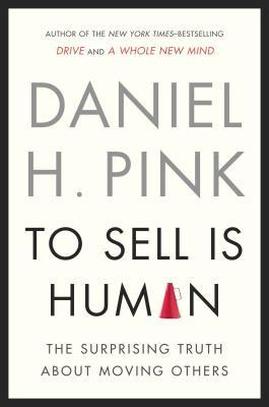
A quote from Arthur Miller's "Death of a Salesman" greets us even before we get to the Prologue. The irony is that Pink's central theme is the refutation of the perception that the Internet and all of its on-line access and data have brought us to a death of sales or to a post-sales world. In fact, we are, rather, in an age of ubiquitous sales. We all are in sales now and it is certainly no longer simply the province of the "Willy Lomans." I think Daniel Pink does a much better job here than in his recent "Drive" by avoiding unhelpful jargon and the creation of distinctions without a difference. In "Drive," he insisted on creating such a tower of babble -- "motivation 3.0," "type-I," "ROE," "if/then contingent rewards," vs. "now/that rewards" -- that we saw the cracks in his premise and not the solid surface of his recommendations and their scientific underpinnings. As I say, "To Sell is Human" is much stronger. And for our work in communities and community systems from education to economic development, I think there are three particularly apt concepts and tools. First, none of us -- especially those seeking to engage folks from multiple sectors or to attract and align resources -- can afford to think derisively of sales or sales people. We can mock the no-longer extent or unsuccessful sales practices, perhaps best embodied by the sport-coated pushy car sales person, but we can't separate ourselves from the need to understand, practice and embrace our ever-present role of "moving others." And second, as I’ve discussed before in my blog ( http://www.workingdifferently.org/4/p...), it is crucial in this new pervasive environment of “sales” that we pivot from challenging folks to do something that we want them to do, but rather, frame all of our attempts to move people into a challenge for them to do something that they want to do. Third, the Pixar Pitch! In order to move others, we need to become much better at clearly stating what it is we want and where it is we want people to go. Pink presents the Pixar Pitch as a prime tool in thinking about this. Pixar Animation Studios, starting with Toy Story, is one of the most successful studios in moviemaking history. Pixar has produced 13 feature films that together have grossed $7.6 Billion. Six of these movies have won the Academy Award for best animated film. And the company has amassed a total of 26 Oscars in all. How do they do it? There are probably a number of interrelated reasons, but no one will discount the stories themselves. Pixar story artist, Emma Coats has cracked the code and argues that every Pixar film shares the same narrative DNA – a deep structure of storytelling that involves six sequential sentences: 1. Once upon a time there was … 2. Every day … 3. One day … 4. Because of that … 5. Because of that … 6. Until finally … Take for example the plot of Finding Nemo. 1. Once upon a time there was … a widowed fish, named Marlin, who was extremely protective of his only son, Nemo. 2. Every day … Marlin warned Nemo of the ocean’s dangers and implored him not to swim far away. 3. One day … in an act of defiance, Nemo ignores his father’s warnings and swims into the open water. 4. Because of that … he is captured by a diver and ends up in the fish tank of a dentist in Sydney. 5. Because of that … Marlin sets off on a journey to recover Nemo, enlisting the help of other sea creatures along the way. 6. Until finally … Marlin and Nemo find each other, reunite and learn that love depends on trust. This six-sentence template is both appealing and supple. For it allows pitchers to take advantage of the well-documented persuasive force of stories but within a framework that forces conciseness and discipline. Now, let’s bring this to a community example where you are seeking to dramatically improve early childhood reading outcomes. 1. Once upon a time there was … an education crisis haunting our schools and communities across North America. 2. Every day … large percentages of our children were not achieving proficiency in vital literacy skills to the point that some in our community even doubted whether they ever could. 3. One day … we developed a simple and shared definition of what children had to know in order to be ready for school. 4. Because of that … our early childhood centers and parents became better at helping all children enter kindergarten ready to learn 5. Because of that … teachers were free to work more on skill development for each individual child. 6. Until finally … every child, irrespective of ethnic or economic circumstance, became a proficient reader by the end of third grade. The final concept that Pink leaves us with is the distinction between problem finders and problem solvers. In a community context, a problem solver may say that we don’t have enough funding to do what are programs are set to accomplish, whereas, a problem finder may see that the issue isn’t doing more of what we are doing but the need to work in completely different ways. Here is the central core lesson of what it means to be creative in our communities – to truly work differently … TO UNDERSTAND THE IMPORTANCE OF PROCESS. A whole line of research has found that people, most disposed to creative breakthroughs in art, science or any endeavor, tend to be problem finders. Problem finders sort through vast amounts of information and inputs, often from multiple disciplines or sectors. They experiment with a variety of different approaches. They are willing to switch directions in the course of a project and they often take longer than their problem solver counterparts. But in the end, a transformative outcome is achieved. Think of the George Bernard Shaw quote (famously attributed to Robert Kennedy): to see those things as they are and ask why (problem solver), or see things that never were and ask why not (problem finder). In the work of working differently to achieve collective impact, we rely on the creative, heuristic, problem finding skills of artists more than on the reductive, fragmented activity bias of problem solving technicians To be tweeted links to my new posts -- blog, book reviews (both nonfiction and fiction), data or other recommended tools -- either go to Twitter.com and follow me @jcrubicon, or just go to my Home page and click on the Twitter button on the right, just above the tweet stream, and follow me @jcrubicon.
“Artists Ship!” This quote from Apple’s Steve Jobs captures the powerful urgency of now, not only in a technological marketplace which re-invents itself constantly, but also, and I would argue more importantly, in our communities where each day children, families – in fact, all of us – fall victim to unrealized or un-attempted solutions. In essence, Jobs is asking what value is creativity, is genius, without results?
If it is too precious to become a product that actually gets into people’s hands, so what?
No one who is a fan of Apple would dispute the art in the product portfolio, but Jobs has leavened “cool” products with products that ship! I have seen so often where the work in our communities is crippled by the genius of the idea (philosophy, habit, method, etc.) having more value than the skill of the outcome. In the search for the silver bullet or the next new thing, we fail to achieve the tangible for our children, the poor or the environment. The communities that do achieve great things: ACT. They understand that “doing good things” when it is more about the actor or their peers or the donors or the volunteers, than the result, is the equivalent of a brilliant idea that never ships.
“If you are not busy being born, you are busy dying.” Consistent with the bittersweet tone of this entire book, Walter Isaacson uses these Bob Dylan lyrics eulogistically to sum up an utterly creative man who revolutionized six industries – personal computers, animated movies, music, phones, tablet computing and digital publishing – yet, died way too young.
This is the biography Isaacson was born to write. Though an adequate historian (“Franklin” and “Einstein”), it is Isaacson’s grounding in today’s society that make him such an effective Boswell for Jobs. It took an editor of Time and CNN to fully comprehend the impact, well beyond technology, that Steve Jobs has had on our times. A classic example of a premier historian so totally wrong for another man truly of his times is Edmund Morris’ abject failure as Ronald Reagan’s biographer. Perhaps an historian cannot bring adequate context to contemporary transformations.
Isaacson appropriately revives Gina Kolata’s 1980’s term of “magical genius” in reflecting on Steve Jobs. Jobs was not a great human being, husband or father. But it is hard to imagine a more creative force on the globe since the introduction of the Apple I in the mid-1970’s. We are blessed to have shared this earthly journey with him. Steve Jobs reminds us of our most unique human freedom, or as his idol, Walt Disney, said: “If you can dream it, you can do it.”
To be tweeted links to my new posts -- blog, book reviews (both nonfiction and fiction), data or other recommended tools -- either go to Twitter.com and follow me @jcrubicon, or just go to my Home page and click on the Twitter button on the right, just above the tweet stream, and follow me @jcrubicon.
Finally a book about change that starts with the end in mind. In most of the prior extensive literature of this area from self-help to management categories, authors and gurus extoll the nobility of the effort rather than the achievement of the result. It is also nice to see recommendations based on research rather than the ego-stroking when-I-was-in-charge polemics of many past CEOs of now marginally successful corporations (e.g., "Execution"). The authors pulled from studies conducted over decades in psychology, sociology and other fields to shed light on how we can make successful changes. The power of many of the studies and observations is how counter-intuitive they appear. Thus, explaining why change is so hard -- we are not programed for it and our well-meaning "gut instincts" are often at 180 degree odds of sustaining the change we seek. While I am most fascinated with change in a community and societal context, the examples here, which also include individual and organizational levels, are very helpful and instructive. I think this is because, as the authors stress, "when change works, it tends to follow a pattern. The people who change have clear direction, ample motivation and a supportive environment." This aligns very directly with the best practices we present to communities and discussed in our book: "Community Visions, Community Solutions." Well, if there's a pattern to follow, why don't we? The basic problem is that "the brain has two independent systems at work at all times," the authors explain. "First, there's what we call the emotional side. It's the part of you that is instinctive, that feels pain and pleasure. Second, there's the rational side, also known as the reflective or conscious system. It's the part of you that deliberates and analyzes and looks into the future." In essence, the rational mind wants change and the emotional mind wants comfort. But don't let the terms fool you ... oftentimes we have seen the rational mind of a businessman in a community gathering embrace the emotional comfort of "lets just do something" rather than invest the process time to draw a clear, rational, path to the solution. One concept, which the authors present, has fundamental implications, especially in communities, for all three elements of change: clear direction; motivation and environmental supports. They call it Fundamental Attribution Error -- a deep-rooted tendency to attribute people's behavior to "the way they are rather than the situation they are in." This gives rise in community to a whole set of broad-brush dysfunctions: blame, "those people," claims of lack of personal responsibility, etc. For example, we have seen children from the lowest socio-economic strata, who for years were thought of as "those kids" who will never make it, perform equal to their counterparts when the community's expectation changed. We have seen in the communities we have worked with, over time, a desire to know what they didn't know. When they see that so much of our failure in communities is situational and not "those people," they see that in fact they have power over the situations their community has created. And that is the SWITCH. To be tweeted links to my new posts -- blog, book reviews (both nonfiction and fiction), data or other recommended tools -- either go to Twitter.com and follow me @jcrubicon, or just go to my Home page and click on the Twitter button on the right, just above the tweet stream, and follow me @jcrubicon.
In the face of raising doubt -- mainly sourced in Washington DC -- about our ability to have a wonderfully optimistic future, Kotkin has presented us with an only slightly Panglossian narrative of our future selves. He makes the case that we, in North America, are in a much better position for the future than Japan, China and Western Europe. "We can fix some of the problems and learn to live with the rest. We have many traits in our culture that will serve us well in the future.” "The Next Hundred Million" provides a vivid snapshot of America in 2050 by focusing not on power brokers, policy disputes, or abstract trends, but rather on the evolution of the more intimate units of American society—families, towns, neighborhoods, schools, industries. It is upon the success or failure of these communities, Kotkin argues, that the American future rests. Its greatest power will be its identification with notions of personal liberty, constitutional protections and universalism.” Beware of policy initiatives that seek to cut us off from these vital birthrights. If you had to produce one single defense of Kotkin’s thesis, it is the concept (ironically, Japanese) of sokojikara, which he defines as our country’s “self-renewing power generated by its unique combination of high fertility, great diversity, and enormous physical assets.” Here is the strongest argument against viewing your community in a passive "glass is half empty" mindset. An exciting future is not winning a zero-sum race of dwindling possibilities...in our near future: community, a sense of place, a connection will carry more power -- both economic and cultural -- than where the factories of the last half-century were located. New eyes and new hope ... the only negative message: if you are not optimistically engaged in this work of community building, step aside for others are. Build your community; build your future!
To be tweeted links to my new posts -- blog, book reviews (both nonfiction and fiction), data or other recommended tools -- either go to Twitter.com and follow me @jcrubicon, or just go to my Home page and click on the Twitter button on the right, just above the tweet stream, and follow me @jcrubicon.
I first came across Seth Godin when I picked up last year’s “Tribes.” I’m now a loyal reader of his blog: www.sethgodin.com. Though he addresses marketing, creative passion, and innovation mainly through a corporate / entrepreneurial lens, I have found many of the concepts and prods he presents as very relevant to our work in communities. In fact, that’s the frame – dramatically improved community outcomes -- I am going to use as I highlight two ideas from “Linchpin” which have value far beyond the usual suspects in his audience of serial purchasers of management books. “Artists Ship!” This quote from Apple’s Steve Jobs captures the powerful urgency of now, not only in a technological marketplace which re-invents itself constantly, but also, and I would argue more importantly, in our communities where each day children, families – in fact, all of us – fall victim to unrealized or un-attempted solutions. In essence, Jobs is asking what value is creativity, is genius, without results? If it is too precious to become a product that actually gets into people’s hands, so what? No one who is a fan of Apple would dispute the art in the product portfolio, but Jobs has leavened “cool” products with products that ship! I have seen so often where the work in our communities is crippled by the genius of the idea (philosophy, habit, method, etc.) having more value than the skill of the outcome. In the search for the silver bullet or the next new thing, we fail to achieve the tangible for our children, the poor or the environment. The communities that do achieve great things: ACT. They understand that “doing good things” when it is more about the actor or their peers or the donors or the volunteers, than the result, is the equivalent of a brilliant idea that never ships. This failure to ship tees up Seth Godin’s second important concept that I want to highlight. It helps answer the why. Why is it so hard to act in a concerted way – in a team, system, or a community – to achieve impact? He presents the idea of our “lizard brain” or as he alternately describes it: “the resistance.” As he puts it, in order to achieve great things or meaningful solutions, we “don’t need more genius, we need less resistance.” The resistance or lizard brain is the primordial desire to be safe. To avoid the unknown. To not venture out of the cave. Despite the passing of the prehistoric days of the saber-tooth tiger, the lizard brain still pushes us to fit in, to not rock the boat. Don’t be stupid. “Visibility” is dangerous. Embarrassment is the new saber-tooth. Courtesy trumps impact. The resistance permits you to stay still. The resistance is an internal aspect of being human, which would prefer to stamp out any insight or art or change. The Devil’s Advocate is a card-carrying member of the resistance. Here are some of the signs of the resistance (both from Seth and myself) – the lizard brain in dominance – that permeate communities failing to achieve greatness. 1) Procrastinate: claiming the need to perfect. 2) Make excuses about lack of money. 3) Set as a goal to have everyone like you...or in Facebook parlance "fan" you. 4) Spend hours obsessing on data collection. 5) Start another committee versus taking action. 6) Excessively criticize/blame the work of your peers, other institutions or sectors. 7) Criticize anyone doing anything differently. 8) Ask too many questions. 9) Don’t ask enough questions. 10) Wrap yourself in jargon. 11) Search for the next big thing while abandoning yesterday’s thing as old. 12) Have an emotional attachment to the status quo. 13) Passionately reject any attempt at accountability. 14) Blame the victims. 15) Have low expectations as to what is possible; what your clients can achieve; what children can learn 16) Zealously argue for an approach while rejecting any method of measuring results 17) Claim that any measure of success destroys the art. 18) Invent anxiety about the side-effects of a new approach 19) Focus on revenge or teaching someone a lesson at the expense of doing the work. 20) Believe it is about gifts and talents and not skill. Any direction you go besides the direction of success is the work of the resistance. And it is always lurking; to save you from greatness. Artists Ship! To be tweeted links to my new posts -- blog, book reviews (both nonfiction and fiction), data or other recommended tools -- either go to Twitter.com and follow me @jcrubicon, or just go to my Home page and click on the Twitter button on the right, just above the tweet stream, and follow me @jcrubicon.
I wanted to be more impressed. But this report falls into the trap of so many well meaning Government Commissions ... they see solutions from a politician's remove -- let us dictate by imposed policy rather than motivate by the clarity of a rigorous objective. In their 10 step recommendation regarding the educational system there is no assurance that the children are better off ... rather the focus is on different programs and things the adults need to do. Where is the central clarity of the measurable outcome?
The Commissioners' assessment of the implications of truly global markets and our degraded educational outcomes on the US standards of living, while somewhat superseded by Friedman ("The World is Flat") and others who gave us a better narrative, is no less valid and concerning.
The failure is in the prescription for change. An analogous failure can be seen in the Global Warming / Al Gore politician's view of achieving change -- a hugh and unwieldy cap-and-trade imposition specifically focused on carbon -- which forces all the loggerheads regarding subsidies, off-sets and minimal movement to alternate fuel sources. Thus the central reference about whether it is meaningful to the average citizen is the price of a barrel of oil versus the environmental outcome to be achieved. And another 25 years have gone by.
Having said this, there is little in their recommendations that I would disagree with on their face. Rather, I see a risk of the continuation of the disconnect of the policy act and a means of assuring ourselves that we are going to achieve the desired state. Most profound element of "fuzzy thinking" in these political fixes are the the core assumptions made. If we don't hold the focus on the outcome desired, we are led into many cul-de-sacs of well meaning recommendations. For instance, the recommendation for higher teacher pay. Probably a correct assertion, but at the present state of knowledge of what improves the classroom outcome for ALL children; it is surely not the causal fix the Commissioners assume. Our educational research has lagged so far behind achieving solutions that we really don't know what "truly effective" teaching (read: all our kids succeed) looks like. Therefore simply paying teachers more to attract higher quality can be a profound waste. Our Investment Banks pay top dollar -- and are we better off for it? The recommendation has as much chance of impact as paying priests more so that more of us might go to heaven.
Here's another example: The Commission's call for universal early childhood education. This could be a powerful tool if we have clarity as what is the desired change state to be achieved; how it will be measured and how we will hold ourselves accountable for its achievement. I, unfortunately, have worked in many communities with near universal pre-school and yet still only a third of those children are ready to succeed in kindergarten and less then 2/3s of these children are able to read at a basic level by the time they reach the Third Grade.
As with the other recommendations, where we have already spent Billions of Dollars on activities, the core consideration must be: Universal Early Childhood Education is only valuable to the degree that it demonstrates improved outcomes for our children. And the Commission falls short of that degree of rigor for any of their recommendations. Don't our children deserve more?
To be tweeted links to my new posts -- blog, book reviews (both nonfiction and fiction), data or other recommended tools -- either go to Twitter.com and follow me @jcrubicon, or just go to my Home page and click on the Twitter button on the right, just above the tweet stream, and follow me @jcrubicon.
|
